Years ago, I thought there was “one way” to officiate a ceremony. A couple would host a wedding—however that might look—and the individual conducting the ceremony signed the license. Alas, especially in a place like New York, that is not the case. There are numerous permutations that are appropriate for couples having different needs.

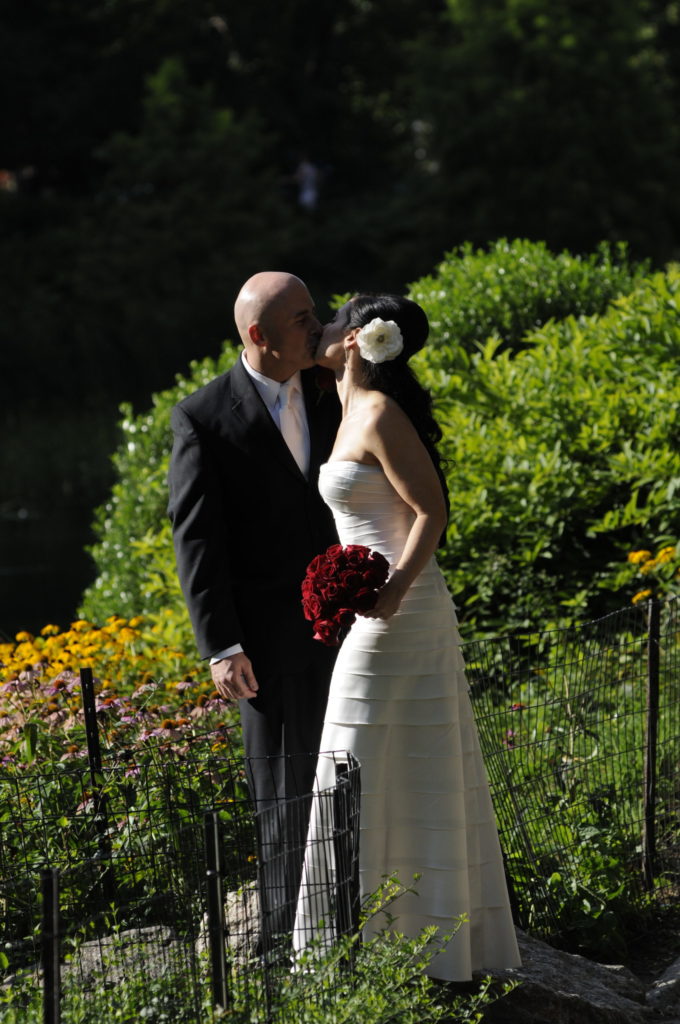
Legal Ceremonies in NYC with Destination Weddings Elsewhere. I have worked with numerous couples who are planning lavish weddings in other countries. In some cases, either the bride or groom may be a non-US citizen and wants to have the wedding “at home.” In other instances, couples simply select a lavish location that will be appealing to family and friends. The prospect of securing a marriage license in another country is daunting. So to simplify the process, a legal ceremony is held here in New York, with the grand celebration to follow. And, in many , if not most cases, the guests are unaware of this set-up. Just last weekend, I conducted a Central Park wedding for an American groom and his Central American bride. They will have a traditional Catholic ceremony in Mexico City later in the summer. It turned out that about 20 of their closest friends and family members attended the private wedding, and it was a very special day, in its own right.

Marriages in advance of the big wedding. In modern America, there are clear advantages offered to married partners, such as access to health insurance. So, sometimes couples will have a legal ceremony well in advance of the Big Day. I am happy to oblige. I have worked with a number of couples who face strict immigration requirements for non-US citizens. They have been privately married (no one knows!) for some time, yet I conduct a ceremony that is as “real” as any wedding that I officiate.

Elopement followed by a wedding on an anniversary. Some couples regret not having a wedding that includes family and friends. One option to address the initial decision is to have a larger vow renewal on a subsequent anniversary that will include loved ones. Although there is no legal implications associated with the second ceremony, vow renewal parties can be every bit as special as a wedding. About a week ago, I was contacted by a bride who was approaching the first anniversary of her elopement. As a new homeowner and with a blended family, she felt that this was the time to have a public function to celebrate all of these events.

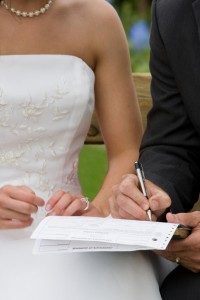
Ceremonies written and delivered by different individuals. Anyone scanning the weekly “style” section will notice situations where a friend or family member is “ordained” online to officiate the wedding. While each state has its own requirements regarding the legalities and registration of such individuals, a consulting celebrant may function as a ghostwriter for the script. After all, it is a tall order for a newcomer to write a ceremony from scratch. A couple of years ago, I worked with a couple who wanted the bride’s brother to deliver the ceremony, and he was overwhelmed by the idea of writing the script. I wrote the ceremony and “officially” married the couple in a private Central Park Ceremony. More recently a bride contacted me about a similar arrangement. Her uncle, a minister in another state, did not wish to pursue the process of registering as a NY wedding officiant. So, I will attend the fancy wedding ceremony, entirely written and conducted by the uncle, and will sign the license privately, with witnesses after the public event. A couple choosing this option should be careful to check out the particulars of the ordination process of the local and state governments. In New York, one may visit the City Clerk’s website or call 212-669-2208.)

At the end of the day, one size does not fit all when it comes to hosting the wedding of your dreams and securing the marriage license. Don’t be afraid to think outside the box and speak with an officiant to make your wishes know.

Share, or leave a comment...

Among students of the women’s suffrage movement, the name Lucy Stone is a familiar one. Born in 1818, she was the first woman from Massachusetts to earn a college degree, graduating from Oberlin College in Ohio. Stone’s long list of accomplishments includes initiating the National Women’s Rights Convention and delivering the speech that led to Susan B. Anthony to enlist in the suffrage movement. As perhaps an historical asterisk, Lucy Stone is the first recorded woman to have continued to use her “maiden name” after marriage. It would be a century and a half, before that debate would really take off, but as I became deeply connected to wedding celebrancy work, I wondered about the preferences of today’s brides relating to the last name they would use following marriage.

One of the highlight’s of any wedding ceremony is the “presentation of the bride and groom.” This is the moment, following the declaration of marriage and the kiss, when the officiant introduces the newly married couple, which of course is usually met with cheers and great applause. I preparing ceremony scripts, I always ask brides and groom if they wished to include this in the ceremony and what names would they be using after marriage. I was a bit surprised to find that the vast majority of my brides were eager to take the surname of their new husbands and delighted at the prospect of being introduced as “Mr. and Mrs.” For those individuals who kept their own name, I offered slightly reworded introductions such as, “I am pleased to be the first to introduce the newly married family of Michael Jones and Mary Smith,” or “For the first time as a married couple, may I introduce Jennifer and David.”

Were my couples representative of contemporary brides and grooms? As I am big fan of statistics and trying to understand the “big picture,” I asked a young associate to track down authoritative figures on this question. According to Brides Magazine (not the Census Bureau, but a reasonably authoritative source), one-quarter of brides don’t change their names. Of the three-quarters who take their husbands name, about a third will use their original surname as a middle name or decide, with some percentage hyphenating the two. And while the City Clerk’s office doesn’t keep official statistics on such matters, they concur that about a quarter of the applicants indicate on their marriage license application that they will not take a new surname.

Regardless of the selection of post-matrimony names, a hearty Mazel Tov is in order for all!

I appreciate the assistance of Niafel Santos in gathering this information. Niafel is a rising junior at the Fashion Institute of Technology.

Share, or leave a comment...